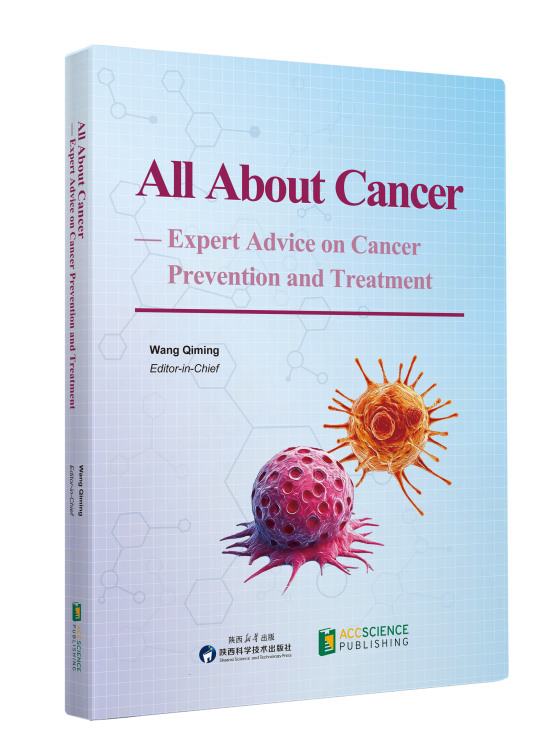
This book, designed to address the general public’s practical needs and from the perspective of medical professionals, combines specialized knowledge and authoritative data—primarily in a Q&A format—to help patients and their families gain an understanding of cancer’s causes, prevention, and main treatment methods. It also introduces rehabilitation approaches such as daily diet, exercise, and traditional Chinese health care, so as to better cooperate with specialists in treatment, overcome the disease, and strive for an early recovery.
Meticulously compiled for scientific accuracy, this book serves as an essential guide to overcoming fear, making informed decisions, and fighting for an early recovery.
Chapter 1 Etiology and Symptoms 1
1.1 Why Did I Get Cancer? 1
1.2 If These Symptoms Appear, Be Alert—They Could Be Early Signs of Cancer 3
1.3 If Swollen Lymph Nodes Are Detected Without Pain or Itching, Should You Definitely Go to the Hospital? 5
1.4 Is Lower Back Pain Always a Herniated Disc? 7
1.5 What Physical Warning Signs Might Indicate Cancer? 9
1.6 Sudden Weight Loss—Could It Be Cancer, and How to Cope with the Fear? 11
1.7 If a Small Lung Nodule Is Found During a Check-up, Does It Mean I Will Get Lung Cancer? 13
1.8 What Factors Are Related to the Onset of Lung Cancer? 16
1.9 On Smoggy Days, Let's Talk About the "Daddy" of Lung Cancer 18
1.10 If Dr. Qiming Also Had Lung Cancer 23
1.11 It's My Illness, But Why Am I Kept in the Dark? 28
1.12 Nothing Truly Important in Life Comes Easy—Including Getting Cancer 32
1.13 Behind the Rising Lung Cancer Risk Among Non-Smoking Women 34
1.14 Is Lung Cancer Hereditary? 38
1.15 I’m Very Concerned About the Health of Today’s Young Generation 40
1.16 Are You the Worst Patient? 44
1.17 Which Cancers May Be Passed on to the Next Generation? 48
1.18 Why Am I Deficient in Salt? 50
1.19 The Psychological Impact on Patients After a Cancer Diagnosis 51
1.20 Does the Onset of Tumor Pain Indicate Worsening of the Condition? 53
1.21 If I Can’t Hold My Breath for Long, Does It Mean There’s a Problem with My Lungs? 54
1.22 Thrombosis: The Overlooked Invisible Killer 56
Chapter 2 Examinations and Diagnosis 58
2.1 Why Are So Many Tests Required After Hospital Admission? 58
2.2 If I Already Had a Head CT Scan at a Local Hospital, Why Do I Need an MRI? 60
2.3 How Should Thoracic Surgery Patients Choose Between Contrast-Enhanced and Plain CT Scans for Initial Diagnosis and Follow-up? 62
2.4 The “Dreaded” Gastroscopy 63
2.5 What Precautions Should Be Taken During Examinations? 66
2.6 How Can We Assess Whether Our Lungs Are Healthy? 69
2.7 Elevated Tumor Marker Levels 73
Chapter 3 Anesthesia and Analgesia 77
3.1 Why Must Patients Avoid Eating and Drinking Before Surgery? 77
3.2 Why Can’t General Anesthesia Be Administered When I Have a Cold? 79
3.3 Why Must I Quit Smoking Before Surgery? 80
3.4 Why Do I Have to Stop Taking My Blood Pressure Medication Several Days Before Surgery? 81
3.5 What Should You Know About Cancer Pain Medications? 82
3.6 Why Do I Still Feel Pain After Taking Painkillers? 83
3.7 Will Postoperative Analgesics Affect Wound Healing or Cognitive Function? 85
Chapter 4 Western Medical Treatments 87
4.1 Which Lung Cancer Patients Are Eligible for Surgery? 87
4.2 What Preparations and Precautions Are Required for Lung Cancer Surgery? 98
4.3 Do All Multiple Primary Nodules in Both Lungs Need to Be Removed? 92
4.4 Does Being Ineligible for Surgery Mean There Is No Hope for Survival? 93
4.5 What Is Radiation Therapy? 95
4.6 Can the Duration of Radiation Therapy Be Reduced? 97
4.7 Is Radiation Therapy Only Used When the Disease Is Incurable? 98
4.8 Will Radiation Therapy Kill Normal Cells? 99
4.9 Why Is the Patient Next to Me Being Transferred for Surgery, While I Start with Chemotherapy? 102
4.10 Why Does Chemotherapy Cause Hair Loss? 103
4.11 Can Chemotherapy Accelerate Tumor Progression and Shorten Survival? 105
4.12 Is Chemotherapy That Causes No Discomfort Effective? 106
4.13 Why Is Regular Blood Count Monitoring Necessary After Chemotherapy? 108
4.14 Is Cancer Contagious? Will Radiation or Chemotherapy Affect Those Around Me? 110
4.15 Which Patients Are Eligible for Targeted Therapy? 112
4.16 Are the Side Effects of Targeted Therapy Less Severe Than Those of Chemotherapy? 113
4.17 Why Is Immunotherapy Often Recommended for Two Years? Does It Mean Patients Can Only Live for Two Years? 114
4.18 What Are the Differences Between Immunotherapy, Targeted Therapy, and Chemotherapy? 116
4.19 What Is Multidisciplinary Team (MDT) Diagnosis and Treatment? 120
4.20 What Is a Venous Access Port? 122
4.21 Is the 1.2 Million Yuan “Miracle” Anti-Cancer Drug Suitable for All Cancer Patients? 124
4.22 Are Folk Remedies Passed Down by Word of Mouth Reliable? 126
4.23 When “Well-Meaning” Acquaintances Delay Treatment 127
4.24 Building Confidence in Treatment Is Key 130
4.25 Sperm vs. Cancer Cells—Can the “Tumor Monster” Be Knocked Out? 131
4.26 Fighting Cancer is a Marathon—Here’s How to Succeed 135
4.27 The “Golden Days” of Health Supplements May Be Ending 141
4.28 From the Sandpile Experiment to Quitting Smoking 147
4.29 The Youthful Immune System in Anti-Cancer Defense 150
4.30 Dr. Qiming’s “True Guide to Weight Loss” 155
4.31 Stay Strong, Lung Cancer Patients 158
4.32 In Shaping Your Own Body’s Environment, You Are More Crucial Than I Am 161
4.33 Is Palliative Care Only for When There Is No Hope? 163
Chapter 5 Traditional Chinese Medicine (TCM) Treatment 166
5.1 What Are the Advantages of TCM in Treating Hand-Foot Syndrome? 166
5.2 What Role Can TCM Play in the Treatment of Advanced Malignant Tumors? 168
5.3 Does Using TCM Mean There Are No More Conventional Treatment Options? 170
5.4 Can the Efficacy of TCM in Cancer Treatment Be Evaluated? 171
5.5 At Which Stages Can Traditional Chinese Medicine Participate in Cancer Treatment? 173
5.6 Is It Advisable to Use Only Chinese Herbal Medicine After a Tumor Is Discovered? 174
5.7 What Is the Correct Course of Action After a Tumor Is Detected? 175
Chapter 6 Prognosis and Rehabilitation 177
6.1 What Precautions Should Cancer Patients Take After Discharge? 177
6.2 When Is Lung Cancer Most Likely to Recur After Surgery, and What Should Be Done If It Recurs? 178
6.3 A Simple Guide to Preventing Cancer Recurrence 180
6.4 What Are the Methods and Key Points of Pulmonary Rehabilitation? 184
6.5 What Diet Should Cancer Patients Follow in Spring? 184
References 191
